
Call Iran a Threat, Then Send It Billions
American leaders will go on television and tell you Iran is one of the greatest threats to regional stability and U.S. interests. Then, with a straight face, they will insist that helping unlock billions around that same regime is not really helping it.
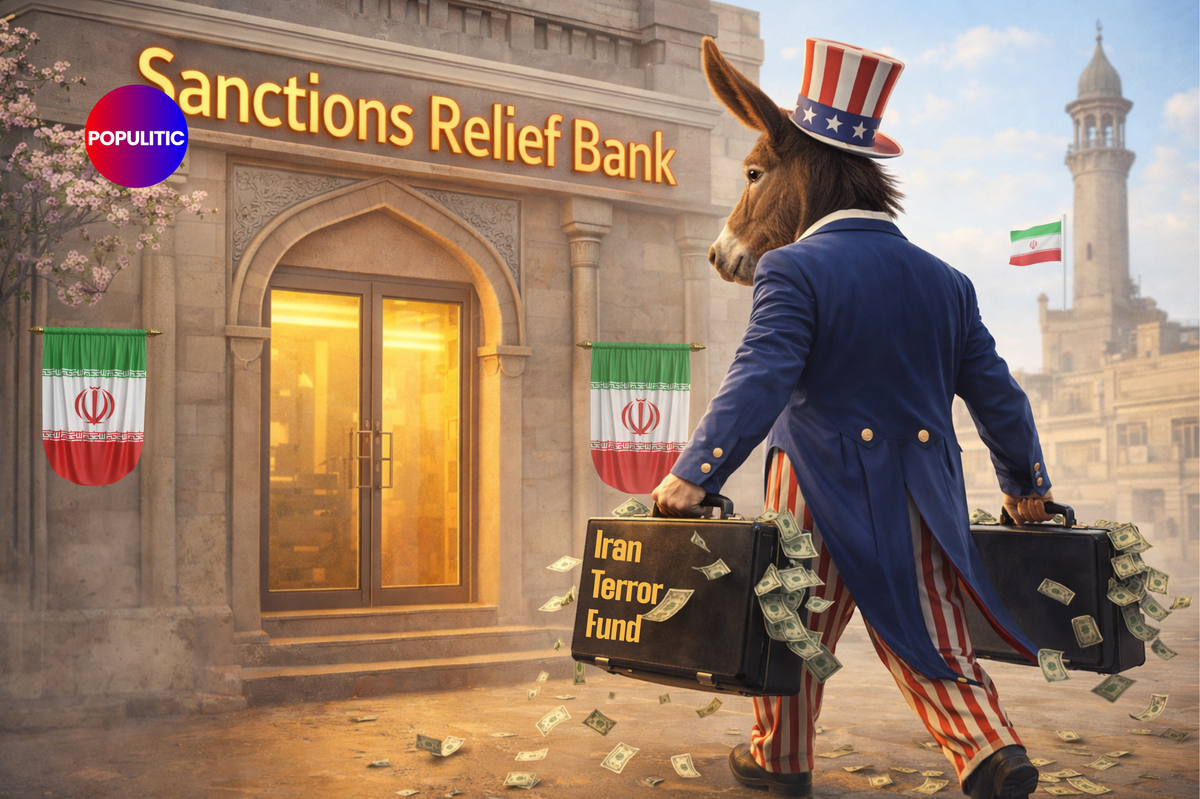
There are bad ideas, there are reckless ideas, and then there is Washington’s long-running hobby of treating Iran like an existential threat in public while quietly handing it financial breathing room behind the curtain.
At some point, this stops being diplomacy and starts looking like geopolitical performance art.
For decades, both parties have agreed on the basics: Iran is not some misunderstood regional actor that just needs a warm hug, a fruit basket, and a really patient State Department briefing. It is a hostile regime. It bankrolls terror proxies, destabilizes the Middle East, threatens American interests, menaces allies, and has spent years perfecting the art of chanting “Death to America” while America’s political class responds with paperwork and carefully worded press releases.
Everybody knows what Iran is.
That is what makes the enabling so grotesque.
Because once you strip away the slick language, the humanitarian packaging, the legal jargon, the sanctions-waiver gobbledygook, and the elite foreign-policy habit of laundering weakness through vocabulary, the result is simple: one side of Washington keeps finding ways to move billions into Iran’s orbit while insisting it is actually being very tough.
Sure.
And a burglar borrowing your ATM card is just participating in localized wealth redistribution.
Obama, Tehran's BFF In Washington
Under Obama, this circus got the deluxe treatment. The administration pushed the Iran deal as though the ayatollahs were one confidence-building exercise away from becoming Switzerland with worse architecture. Along the way came the now-infamous $1.7 billion settlement and sanctions relief that Treasury estimated gave Iran access to a little over $50 billion in usable assets. The media class, as usual, rushed in to explain that the public was being terribly unfair by noticing that a regime openly hostile to the United States had suddenly gotten a whole lot more room to breathe.
How gauche of the peasants to notice money.
Then came the familiar excuse: “Well, technically...”
Technically it was a settlement.
Technically it was sanctions relief.
Technically it was Iran’s own money.
Technically it wasn’t a giant pallet stamped CONGRATULATIONS ON THE TERROR NETWORK.
Fantastic. Technically, you can call a shark an “aquatic conflict stakeholder.” It’s still a shark.
That has always been the scam. Washington loves to hide reality inside terminology. It’s never “bankrolling.” It’s “facilitating access.” It’s never “appeasement.” It’s “de-escalation.” It’s never “feeding a regime that wants you dead.” It’s “creating humanitarian channels.”
And under Biden, the same rotten playbook got a sequel nobody asked for.
The administration approved the transfer of $6 billion in Iranian funds from South Korea to restricted accounts in Qatar. On top of that, another roughly $10 billion tied up in Iraq waiver-related funds hovered in the background under the same familiar logic: don’t worry, it’s restricted, it’s monitored, it’s humanitarian, it’s controlled, it’s not really what it looks like.
Washington always thinks it sounds smart when it says that.
It actually sounds like a guy assuring you the tiger in the living room is harmless because technically the meat was served in a regulated bowl.
The central lie here is that hostile regimes are somehow too stupid to understand fungibility. But Iran’s rulers are not stupid. Evil, yes. Brutal, yes. Delusional, often. But stupid? No. They understand money perfectly. If outside pressure is eased, even partially, they gain room. If certain needs are covered through restricted channels, other resources can be moved elsewhere. If sanctions pressure weakens, the regime survives more comfortably. That is not a right-wing talking point. That is how math works.
And that is what makes this all so obscene.
American leaders will go on television and tell you Iran is one of the greatest threats to regional stability and U.S. interests. Then, with a straight face, they will insist that helping unlock billions around that same regime is not really helping it. Apparently in Washington, if you use enough lawyer-approved verbs, reality itself just gives up and leaves the room.
But the Middle East does not care about Washington’s word games.
Iran’s proxies do not care about the semantic difference between “cash” and “restricted access to funds.”
Terror networks do not pause operations because a Treasury memo used softer language.
Ballistic missile ambitions do not collapse because some Beltway genius swore the funds were earmarked for humanitarian purposes.
The regime cares about one thing: survival.
And every time Washington relieves pressure, unlocks assets, or creates another financial off-ramp dressed up as diplomacy, it helps that survival.
That is the real scandal.
Not just that Iran is dangerous. Everyone already knows that.
Not just that Democrats keep dressing up weakness as sophistication. We know that too.
It is that the same people who want credit for “taking the Iranian threat seriously” are often the very same people engineering the financial breathing room that keeps the regime comfortable enough to keep going.
That is not strategy.
That is not peace.
That is not clever statecraft.
That is enabling your worst enemy and then acting offended when people notice.
At some point, Americans should be allowed to ask a very simple question: if Iran is truly the threat Washington says it is, why does one side of the political establishment keep treating the regime like a hostile government on the podium and a delicate charity case in policy?
Because you cannot call something an existential danger while repeatedly helping it stabilize. You cannot say Tehran is the arsonist and then keep sliding it matches under the door. You cannot claim to be protecting the United States while constantly searching for elegant new ways to bankroll the people who spend their lives undermining it.
Actually, in Washington, you can.
They call it diplomacy.
The rest of us should call it what it is: national security with a death wish.

Comments ()