
Congress Had One Job: Release the Misconduct Records. It Voted to Bury Them Instead.
This week, the House had a straightforward choice: force public disclosure (with redactions) of sexual misconduct/harassment investigation records tied to members — or keep it all tucked inside the same internal system that’s protected reputations longer than it’s protected staff.
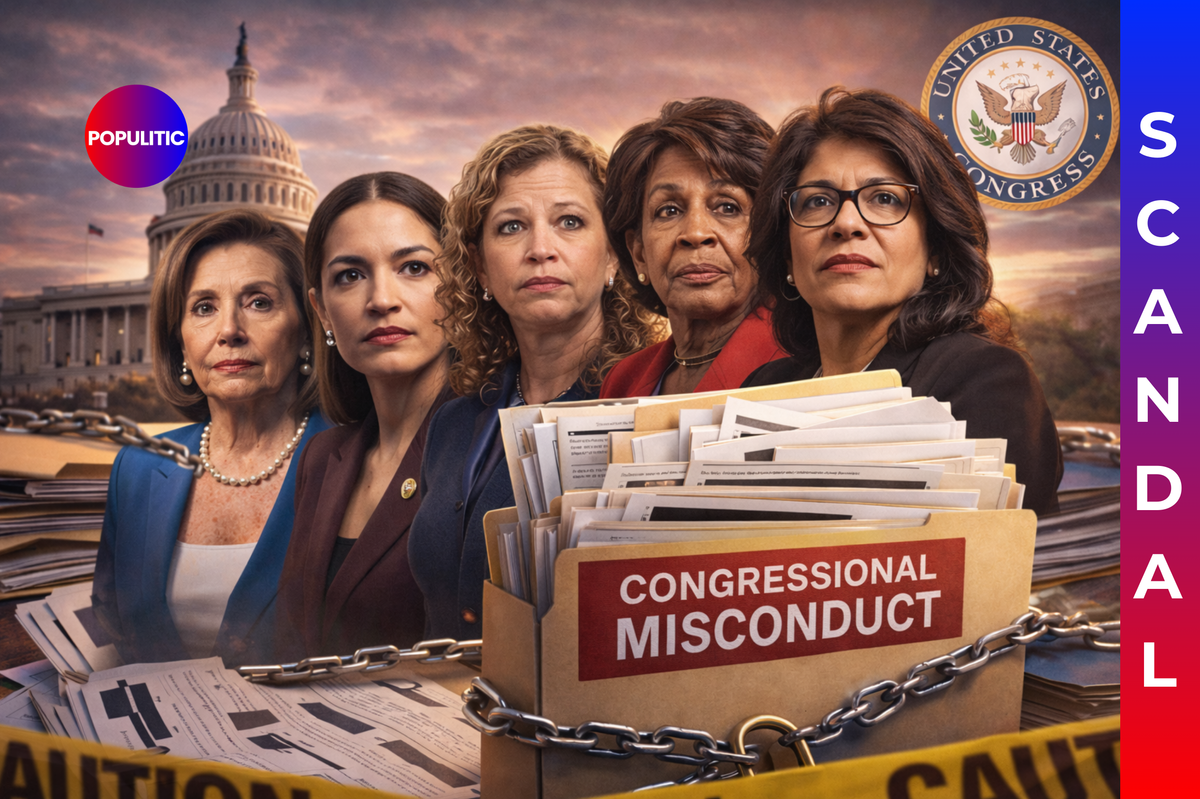
Congress never misses a chance to lecture the country about “workplace standards.” But when the workplace is Congress, suddenly everyone discovers the value of privacy, process, and a nice quiet room where accountability goes to take a nap.
This week, the House had a straightforward choice: force public disclosure of sexual misconduct/harassment investigation records tied to members of congress— or keep it all tucked inside the same internal system that’s protected reputations longer than it’s protected staff.
The House chose the third option Washington loves most: a procedural escape hatch.
It passed a motion to refer the transparency resolution back to the Ethics Committee — 357–65 — which, in real-world terms, means the push for disclosure got politely executed and placed in the “we’ll look at it later” cemetery.
And the part voters should not ignore: this wasn’t partisan.
This was bipartisan self-preservation in its purest form — 175 Republicans plus 182 Democrats teaming up to keep the files on the inside.
If Congress ever needed proof that it can work together, congratulations — it just did. On the one issue that directly affects whether you get to see how they handle abuse of power. If they would only work this well together on other issues, our nation would be much better for it.
The excuse you’re going to hear
You’ll hear the same line on loop: “We’re protecting victims.”
Yes, protecting victims matters. But here’s the hypocrisy: if Congress truly prioritized victims, it would have built a credible, independent, transparent system years ago — instead of waiting until it got cornered on the House floor and then using “victim protection” as the emergency exit.
Ethics leadership said public release of interim materials could chill victim cooperation, retraumatize victims, and discourage witnesses. That’s the argument.
Here’s the problem: Congress always discovers “protecting victims” right when it’s being asked to show its work.
Victim protection should be the foundation of the system — not the shield used to block sunlight.
High-Profile Women Who Backed the Cover-Up Vote
A lot of members voted to refer this away and failed the accountability test. Here are high-profile women who voted to bury the push for immediate disclosure:
- Nancy Pelosi (D-CA)
- Katherine Clark (D-MA)
- Lisa McClain (R-MI)
- Maxine Waters (D-CA)
- Rosa DeLauro (D-CT)
- Virginia Foxx (R-NC)
- Debbie Wasserman Schultz (D-FL)
- Zoe Lofgren (D-CA)
- Jan Schakowsky (D-IL)
- Alexandria Ocasio-Cortez (D-NY)
- Ilhan Omar (D-MN)
- Rashida Tlaib (D-MI)
- Ayanna Pressley (D-MA)
- Maria Elvira Salazar (R-FL)
- Nicole Malliotakis (R-NY)
- Lauren Underwood (D-IL)
- Doris Matsui (D-CA)
- Lois Frankel (D-FL)
That list matters because many of these officials speak fluently about workplace protections, dignity, and accountability — and then voted to keep Congress’s own record locked inside the building.
If that isn’t hypocrisy, it’s at least a masterclass in rules-for-thee.
Nancy Mace: The Person Who Lit the Match (And Then Watched Both Parties Grab Fire Extinguishers)
Let’s be clear about what happened here: this vote didn’t “accidentally” land on the House floor. It was forced there.
Nancy Mace used a procedural weapon called a question of the privileges of the House to force a floor vote — meaning leadership didn’t get to quietly ignore it, bury it in a drawer, or pretend it didn’t exist.
Her resolution would have directed Ethics to preserve and publicly release records tied to sexual harassment, misconduct, and prohibited member-staffer relationships — with personally identifying info for victims and witnesses redacted. It included alleged misconduct connected to official duties, campaigns, and other interactions tied to the role.
Before the vote, Mace basically predicted the ending: she warned that members would hide behind “let the process play out,” and that sending it back to committee would mean it would never see daylight.
Then the House did exactly that.
Afterward, Mace didn’t sugarcoat it. She accused both parties of colluding to protect predators and said members who voted to bury the records were protecting the cover-up, not the victims.
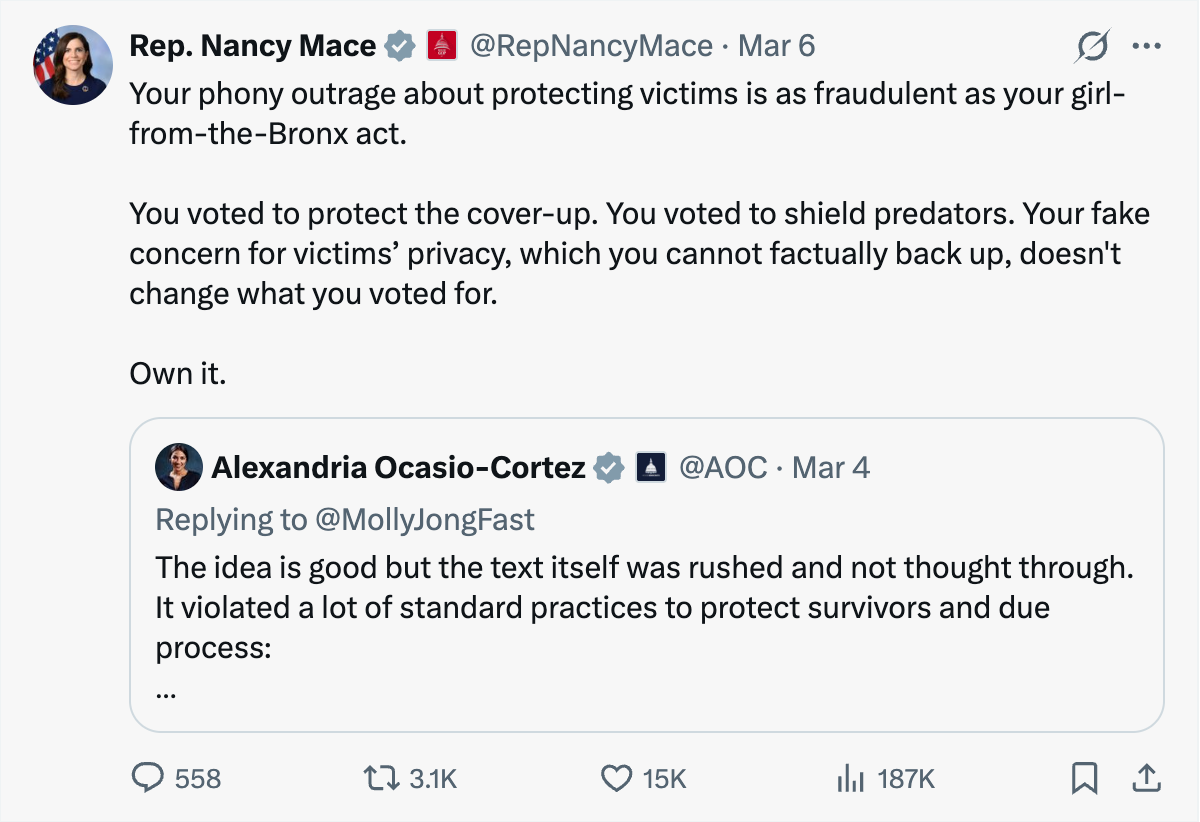
And here’s the uncomfortable extra layer: Mace herself is currently under Ethics review for a separate matter involving housing reimbursements — which she denies and calls politically motivated.
Congress is always messy. But on this issue, she still did what most lawmakers refuse to do: she forced an on-the-record vote.
That alone explains why leadership hated it. This wasn’t just about documents — it was about control. Because once the House is forced to vote publicly on its own misconduct machinery, the institution loses its favorite luxury: silence.
What voters heard (and why it matters)
Voters heard the oldest lie in American politics:
“Trust us. We’ll handle it internally.”
A public institution does not get to demand public trust while insisting on private accountability. If the process is confidential, the outcomes are opaque, and the accountability is voluntary — then what you have isn’t a system. It’s a shield.
The Populitic Takeaway
Congress just proved something important:
When accountability threatens them, “transparency” becomes “complicated.”
When the spotlight swings inward, “urgent” becomes “later.”
And when voters ask for receipts, Congress hands them a committee referral and calls it “responsible.”
If you cannot vote for transparency in your own workplace misconduct system, you don’t get to lecture any employer in America about standards.
So here’s the real takeaway, carved into stone:
They didn’t vote to protect victims. They voted to protect themselves — and they did it together.


Comments ()