
Miami’s Arches: The “Signature” Traffic Nightmare That’s Now a Lawsuit With Decorative Concrete
Miami didn’t ask for arches. Miami asked for less traffic. Instead, we got a giant set of “signature” bridge arches over Biscayne Boulevard—nicknamed “The Fountain”—and the only thing it’s been spraying so far is delays, lane shifts, and legal bills.
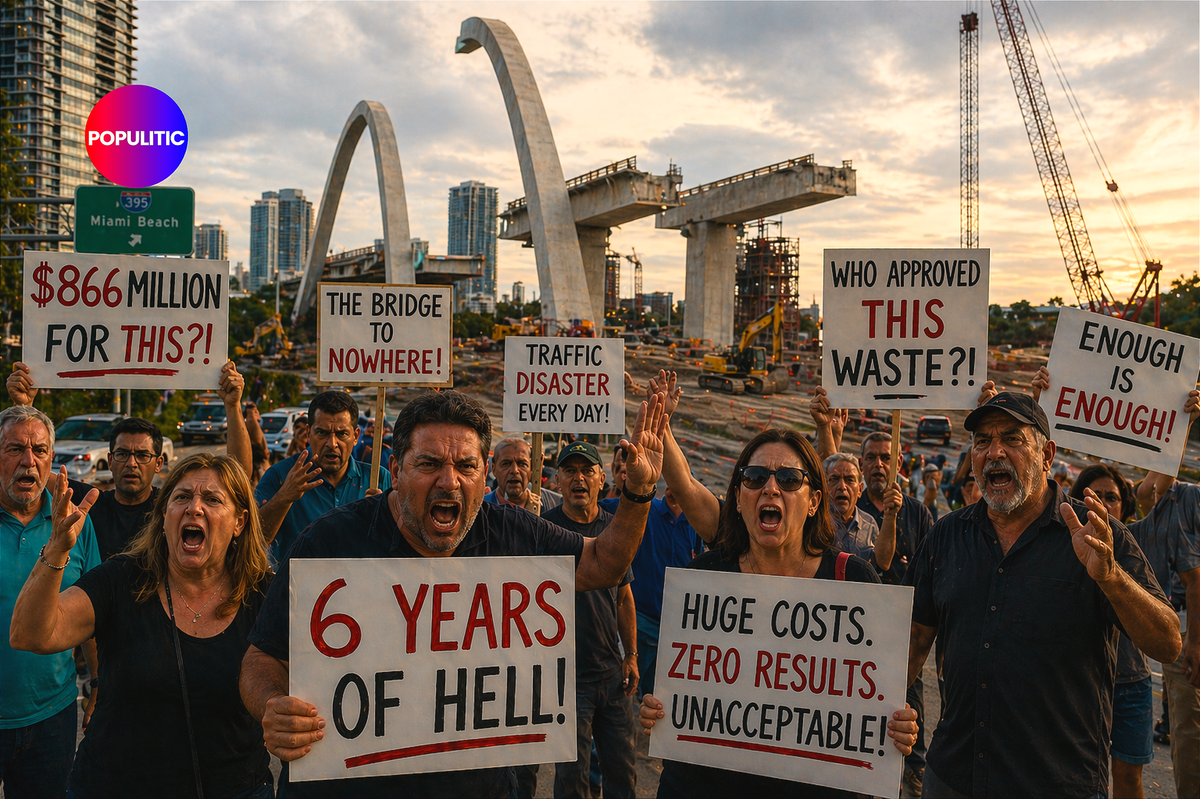
Miami didn’t ask for arches. Miami asked for less traffic.
Instead, we got a giant set of “signature” bridge arches over Biscayne Boulevard—nicknamed “The Fountain”—and the only thing it’s been spraying so far is delays, lane shifts, and legal bills.
This project was pitched as the grand fix for one of the most painful choke points in South Florida: the I-95 / I-395 / SR-836 interchange. The promise was simple: rebuild the spaghetti, improve safety, add capacity, and make it flow.
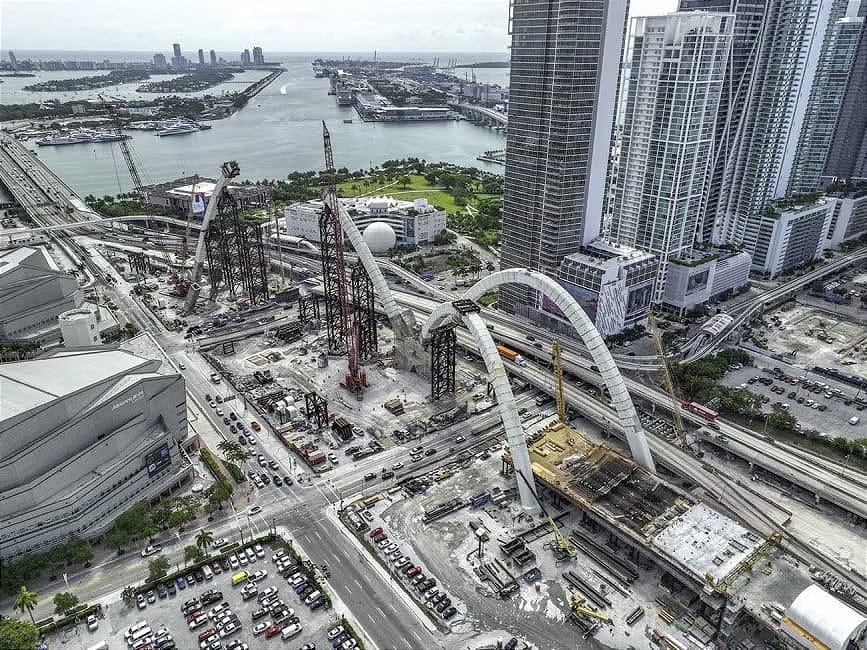
Here is what HDR Inc., the engineering and design firm said about the project:
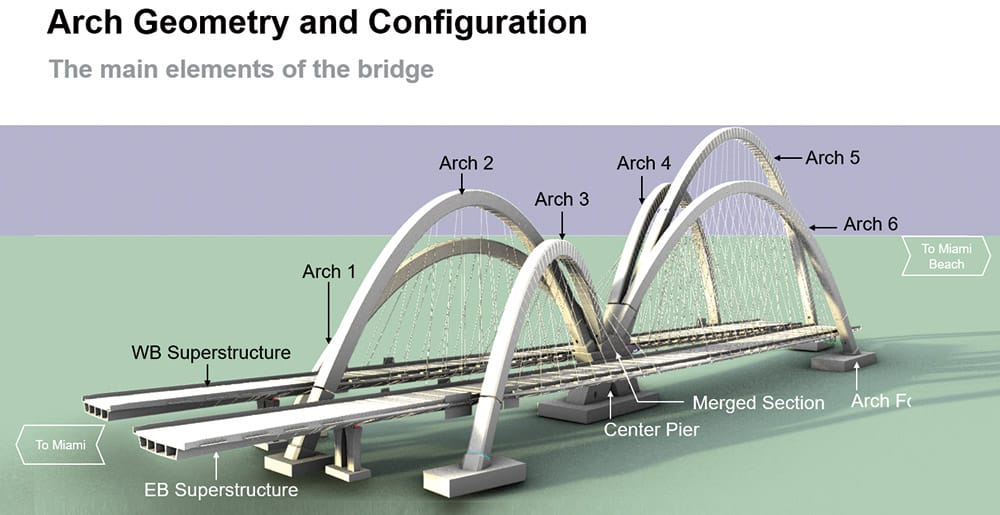
A signature bridge structure —The Fountain — will carry a key segment of I-395 over NE 2nd Avenue and Biscayne Boulevard and redefine the Miami skyline with its six sweeping arches. Spanning 1,025 feet across two busy downtown Miami roadways, its largest arch will soar 325 feet above the ground and measure 650 feet across.
The reality has been… Miami.
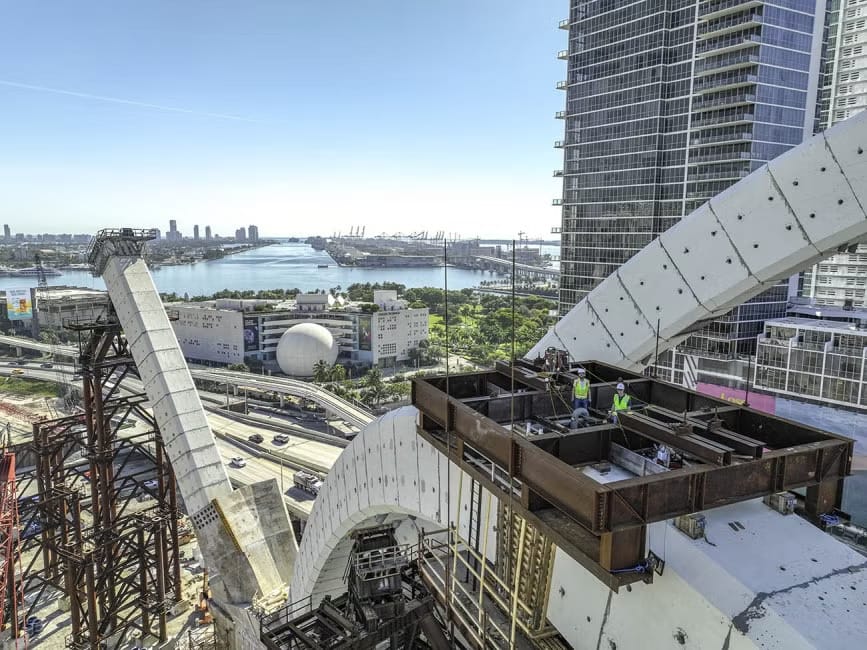
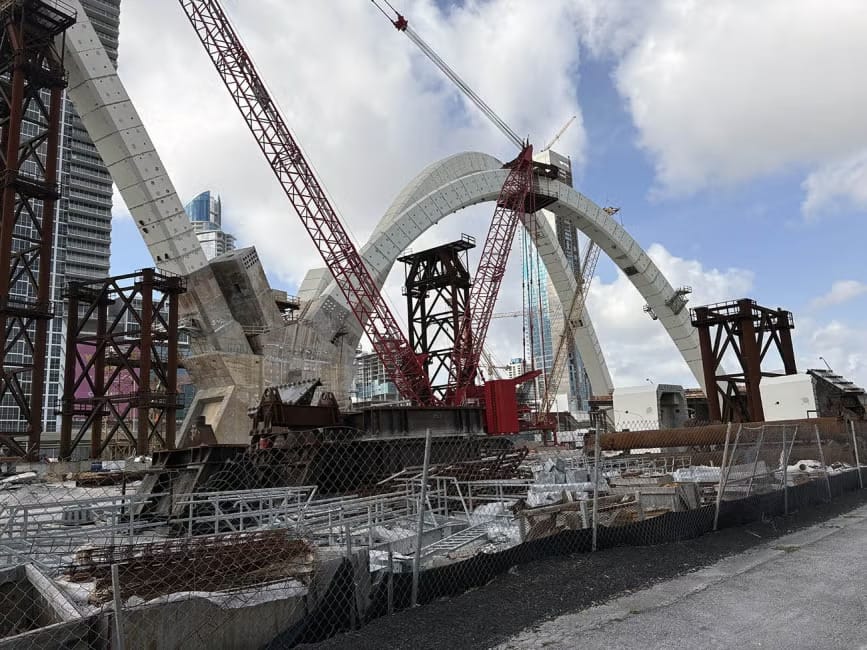
Photos: HDR Inc. | The cracked concrete is on the base like the image on the rightRenRende
The numbers: this thing got bigger, slower, and more expensive
When the project was sold to the public, the “dream” number was $802 million and a timeline that would’ve had it largely done years ago.
Now? The official cost is being cited around $866 million, and the completion date has slid to late 2029.
So no, not literally “double”… but definitely the kind of “how is this still going?” escalation that makes drivers feel like they’ve aged five years between exit ramps.
The traffic reality: “Connecting Miami” has mostly connected you to brake lights
If you’ve been driving anywhere near downtown for the last several years, you already know the routine:
- lane shifts that change like Miami weather
- ramps that feel like escape rooms
- “temporary” patterns that outlive relationships
And the public frustration is not subtle. Even in reporting on the legal mess, commuters describe it as “horrible,” because “horrible” is the polite word you can say on camera. In Miami lingo is basicaly: "bro, this shit fucking sucks."
Follow the money: who’s paying for this and who signed off?
This wasn’t a City of Miami art project. This is a state-led transportation megaproject:
- Project sponsors: Florida DOT + Miami-Dade Expressway Authority (MDX).
- Delivery method: design-build-finance (the “one contract to rule them all” model).
- Private partner picked to build it: Archer Western-de Moya (AW-dMG joint venture).
- Funding sources: mostly state transportation funds (motor fuel taxes, vehicle fees, documentary stamps, etc.) plus MDX toll revenue bond proceeds.
So yes: this is paid for through the transportation money machine—gas taxes/fees and toll-backed dollars—rather than “Miami bought arches because it was bored.”
The scandal core: the arches became a courtroom problem
Here’s where the plot turns from “construction delay” into “legal thriller.”
The lead contractor claims the project’s delays and extra costs are tied to design errors (including how wind loads were handled for the unusual arch structure) and other issues—enough that lawsuits describe hundreds of millions in additional costs.
One highly specific legal battle that matters:
- The design-build team sued its engineering partner over alleged design shortcomings connected to the signature bridge.
- That dispute led to a settlement where the engineering firm agreed to pay $12 million.
- As part of that settlement, the contractor released $30 million in withheld fees.
And because Miami can’t do “closure,” the contractor later went after insurers arguing that coverage should kick in for the broader cost impacts it alleges (the “we’re still not done paying for this” phase).
Also in the mix: allegations about defective concrete that had to be removed and replaced—more delay, more cost, more people wondering why “quality control” is always discovered after the pour.
The arches nobody asked for… but Miami is getting anyway
Let’s be honest: this is what happens when infrastructure tries to be iconic.
Miami didn’t demand a skyline accessory. Miami demanded:
- safer ramps
- fewer bottlenecks
- less daily roulette
- and to extend THE F****G METRO RAIL!
Instead, we got a monument to the phrase: “It’ll be worth it when it’s done.”
And now “when it’s done” is 2029—which means a whole generation of drivers will have learned to navigate downtown solely through instinct, resentment, and Waze.
Final takeaway
This isn’t just “a delayed project.” This is a case study in how big public works go sideways:
- Sell the dream.
- Lock in the contract.
- Discover the design problems.
- Add years.
- Add money.
- Add lawsuits.
- Quietly update the completion date and hope nobody notices.
Miami’s arches may eventually look great in drone shots. But until the ramps actually flow and the cones disappear, this “signature bridge” project will be remembered for what it’s been for years:
A very expensive way to turn a commute into a personality trait.
Why? Cause, Miami!

Comments ()